
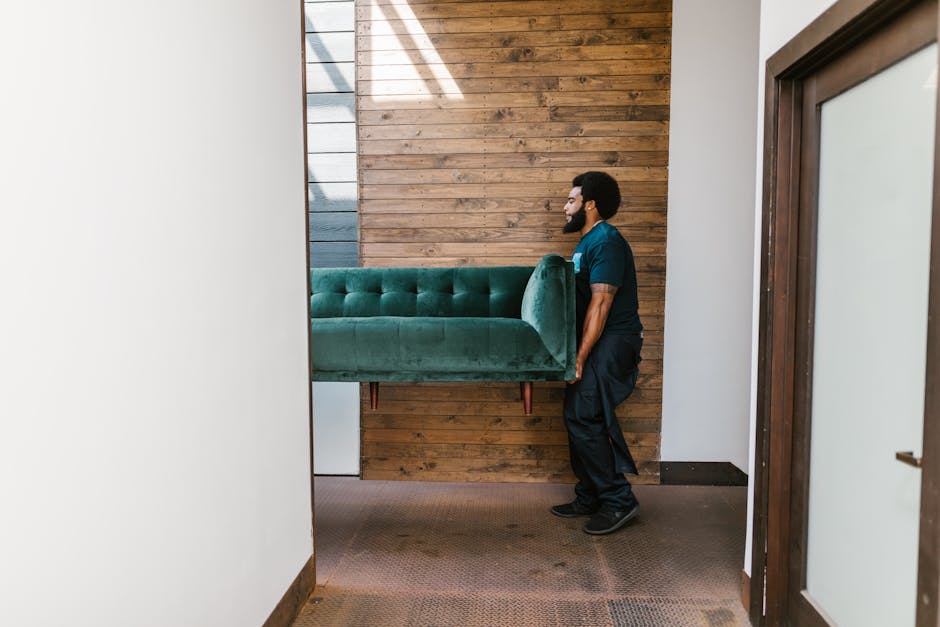
White-glove furniture delivery in Los Angeles starts around $150 for a single accessible item and climbs past $1,500 for a heavy, oversized piece that needs a crew of four, a hoist, or a stairwell disassembly. Most homeowners moving a few pieces — a sectional, a dining table, a bed, a couple of case goods — land between $300 and $800 for the whole delivery. Below that range you are usually buying curbside drop-off with a nicer name on the invoice; above it, you are paying for real problem-solving: rigging, protection, reassembly, and someone accountable if the marble cracks.
The typical range, and what a real white-glove delivery covers
Across Southern California, white-glove delivery is priced three ways: per item ($150–$400 for standard furniture, $400–$1,200 for oversized or fragile), by the hour with a two- or three-hour minimum ($150–$250 per hour for a two-person crew, $200–$350 for three), or as a flat project fee for a full staging or short-term-rental install. Long-distance or inter-county deliveries — say a Newport Beach warehouse to a Santa Barbara hillside home — are often quoted as a flat rate that folds in drive time, since a 120-mile leg on the 101 can burn three hours each way.
What the word is supposed to mean: the crew arrives with the piece already wrapped in moving blankets and stretch film, brings it inside the residence, takes it to the exact room you specify, unboxes it, assembles or reassembles it, levels it, sets it in place, and hauls away every scrap of cardboard, foam, and plastic. Floors get protected on the way in — ram board or neoprene runners on hardwood, corner guards on drywall, door jamb protectors on tight entries. Nothing gets dragged. Nothing gets left in the garage.
What it does not include unless you ask for it and pay for it: hanging mirrors or art on the wall, mounting a TV, anchoring a dresser to a stud, electrical or plumbing hookups on anything, hauling away your old furniture, or storage between pickup and delivery. Those are add-ons, and they are where a $400 quote quietly becomes $700.
The five factors that actually move the number
Access is the biggest one, and it is not close. A ground-floor delivery in a Riverside tract home with a straight shot from driveway to living room is the cheapest job a crew will do all week. A fourth-floor walk-up in a 1920s Hollywood fourplex with a 30-inch stair turn and no elevator can triple the labor on the same sofa. Crews commonly add $50–$100 per flight above the first, and buildings with a service elevator that must be reserved in a two-hour window force the job onto a fixed schedule that carries its own premium.
Weight and dimensions come next. Anything over roughly 200 pounds — a stone-top dining table, a cast iron tub, a 90-inch marble console, a Sub-Zero — needs three or four hands and often specialty equipment: stair-climbing dollies, panel carts, four-wheel skates, suction lifters for glass. Piano and safe moves are their own category and usually start at $400–$800 locally for an upright, more for a grand.
Assembly complexity is underrated. A flat-pack bed frame with 40 fasteners is 45 minutes. An imported wardrobe that ships in six crates with no English instructions is a half-day, and reputable companies will bill it at hourly labor rather than a per-item rate. Ask specifically whether assembly time is capped.
Then there is the Southern California geography problem. Hillside homes in the Palisades, Laurel Canyon, Los Feliz, and much of Ventura County have narrow private roads, no truck turnaround, and long stair runs from the street to the front door. Crews frequently have to shuttle from a 26-foot box truck to a smaller vehicle, or hand-carry 100 feet uphill. That shuttle adds $100–$300. Coastal HOAs in Orange County and San Diego often restrict delivery hours to weekdays between 9 a.m. and 4 p.m. and require a certificate of insurance on file 48 hours in advance.
Finally, timing. Same-week or after-hours slots typically carry a 15–30 percent premium, and month-end Fridays — when Los Angeles lease turnovers stack up — are the most expensive days on the calendar. Book a Tuesday mid-month and the same job often prices lower.
Low, mid, and high: what each tier buys
| Tier | Typical cost | What you get | Best fit |
|---|---|---|---|
| Threshold / basic delivery | $75–$150 per item | Two people, boxed item to the first dry interior space or garage. No unboxing, no assembly, no debris removal. | Flat-pack pieces you plan to assemble yourself; ground-floor access |
| Standard white glove | $150–$400 per item, or $300–$800 per small delivery | Blanket wrap, floor and jamb protection, room of choice, unboxing, standard assembly, placement, packaging hauled away. | Most residential deliveries: sofas, beds, dining sets, casegoods |
| Premium / specialty | $500–$2,000+ per piece or project | Three- to four-person crew, disassembly and reassembly of oversized items, hoisting or window removal coordination, crating, climate-aware handling, condition reports with photos, storage staging. | Stone tops, antiques, art, pianos, imported case goods, full staging or Airbnb installs |
The tiers differ less in politeness than in headcount and risk. A threshold delivery is priced on the assumption nothing goes wrong, because the driver never leaves the front hall. Standard white glove prices in time inside the home, which is where damage happens, so the crew is smaller but trained and the company carries the exposure. Premium pricing exists because a four-person crew, rigging gear, and a documented condition report cost real money before the truck leaves the yard — and because replacing a single custom marble top runs $2,000 to $6,000. When the piece is worth more than the delivery is worth several times over, the premium tier is arithmetic, not luxury.
The costs the headline number leaves out
Old furniture removal is the most common surprise. Hauling away the sectional you are replacing typically runs $75–$200 per piece depending on size and whether it needs to go to a transfer station; mattresses often carry a separate disposal fee of $30–$60 in Los Angeles County because of recycling requirements. Donation pickup is cheaper but rarely same-visit.
Building fees are real and they are yours, not the mover's. Many Los Angeles and San Diego high-rises charge a $100–$500 refundable elevator or move-in deposit and require padded elevator protection installed by building staff. Some Orange County HOAs charge a flat $50–$150 administrative fee for any delivery truck over a certain length. Ask your HOA or building manager before you book, not the day before.
Hoisting is the big one. If a sofa will not clear the stairwell or elevator, the options are window removal and hoist, crane service, or returning the piece. Hoists commonly start at $500 and can reach $2,500 in dense Los Angeles neighborhoods where a street or sidewalk closure permit is required — permits themselves are usually a few hundred dollars and can take a week or more to obtain. A pre-delivery site survey that catches this in advance is worth every dollar.
Storage between pickup and install is priced separately, generally $75–$250 per month for a few pieces in a warehouse, plus in-and-out handling. Short-term rental and staging clients hit this constantly when a closing date slips. Finally, expect a fuel or long-carry surcharge on anything beyond about 25 miles from the origin warehouse, and understand that a redelivery caused by a locked door or missing building approval is billed as a new trip, typically at the two- or three-hour minimum.
When the cheap option ends up costing more
The math is unforgiving. A $600 white-glove delivery versus a $200 threshold drop is $400 in savings, right up until a $3,000 sectional gets a two-inch tear pushing it through a 32-inch doorway. Doorway and stair damage is worse: patching and repainting drywall corners runs $200–$600, and refinishing a gouged section of oak flooring is often $800–$2,000 because you rarely can patch just one board.
Self-assembly failures are quieter but common. A bed frame torqued out of square squeaks within a month and voids most manufacturer warranties. A dresser set on an unlevel floor — and plenty of Southern California homes built before 1960 have settled slabs and sloping second floors — will bind its drawers until someone shims it. Crews that level and check operation before leaving prevent a callback you would otherwise pay for.
Then there is the liability question, which is the single most important thing to ask about and the one homeowners skip. Basic released-value coverage on a household move is standard at 60 cents per pound per article. That means a 60-pound $4,000 chair is worth $36 if it is destroyed. Full-value protection costs more and is worth pricing out on anything you would be upset to lose. Ask what coverage applies, ask for it in writing, and ask whether the company will provide a certificate of insurance naming your building — a firm that cannot produce one on request is not going to get past your front desk anyway.
Common questions
Do I need a permit for a furniture delivery? Almost never for a normal delivery. You need one when a truck or crane blocks a public street or sidewalk, which is common in Santa Monica, Long Beach, and parts of central Los Angeles, and for exterior hoists. The company handling the hoist should manage the application, but the cost passes to you.
How long does a white-glove delivery take? Budget 45 to 90 minutes for one or two pieces with good access, and three to five hours for a full room with assembly. A whole-home staging or short-term rental install of eight to twelve rooms usually runs one to two full days, and the crew will want the space empty and clean before they start.
Will the crew take my old furniture? Only if you arrange it in advance, and it is a separate line item at roughly $75–$200 per piece. It also changes the truck plan, because outbound items need room. Mention it when you request the quote, not when the crew arrives.
What if a piece will not fit through the door? A good crew measures first and tells you before they try. Options are legs and feet removed, back panel or arms detached on the sofa, door taken off its hinges, or a hoist. Some pieces genuinely do not fit, which is why a photo of your entry, hallway, and stair turn is the most useful thing you can send before booking.
Is white-glove delivery worth it for flat-pack furniture? Usually not at the premium tier. For mass-market flat pack, threshold delivery plus a couple of hours of assembly labor is the cheaper path. It becomes worth it when the box weighs more than 150 pounds, when there are stairs, or when you have six boxes and no weekend.
How far in advance should I book? Two to three weeks for a standard delivery, four or more for month-end dates, hillside access jobs, or anything needing a building-reserved elevator. Last-minute is possible and usually costs 15 to 30 percent more.
Getting a real number for your address
Every range above is a national or regional benchmark; the quote that matters is the one written against your specific doorway, stair turn, and street. Have five things ready and most companies can price the job accurately in one phone call rather than sending someone out: the exact origin and destination addresses, a list of items with rough dimensions and whether each is boxed, photos of the entry, hallway, and any stairs or elevator, your building or HOA delivery rules including required insurance certificates and permitted hours, and your date flexibility. If a piece has a stone top, glass, or is an antique, say so first — it changes the crew size and the coverage conversation.
Then ask three questions before you commit: how many people are on the crew, what liability coverage applies to my items and can I see it in writing, and what specifically is excluded from this price. A company that answers all three plainly is telling you what it will actually do. Move Haus is a service-area company covering Orange County and the rest of Southern California, and Selvin Alvarado can be reached at (657) 273-1324, 24/7, to walk through the details of a delivery, staging install, or short-term rental setup.