
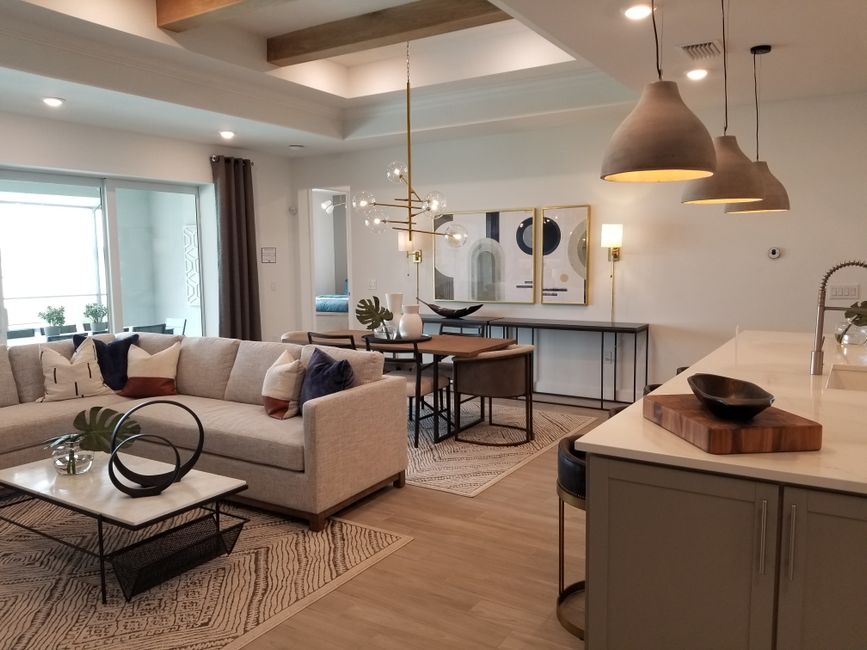
Fall booking windows in Southern California open earlier than most hosts expect. Guests coming for October conferences in Anaheim and downtown Los Angeles, Thanksgiving family stays in Orange County, and Central Coast wine weekends near Paso Robles are searching in late August and early September. If your listing photos still show a half-furnished living room in mid-September, you are not competing for those reservations — you are waiting for the leftovers. A single missed two-week booking at a $220 nightly rate is roughly $3,000 gone, and the algorithm penalizes listings with thin booking history heading into the busy stretch.
The fix is not complicated, but it is sequenced. Furniture has to arrive, get built, get placed, and get photographed in that order, and every delay pushes the photo shoot later. Here is the order that works.
The pre-fall checklist
- Lock your delivery window before your photo date. Book the furniture drop and assembly first, then schedule photos for two or three days after. Reverse that and you will be staging a room around boxes. Most furniture retailers quote two to six weeks for in-stock upholstery in Southern California, longer for anything custom, so order at least a month out.
- Inventory what the listing actually needs, room by room. Guests judge sleeping capacity, seating capacity, and workspace. A three-bedroom that sleeps six needs six real sleeping surfaces, not a futon counted as a bed, plus dining seating for six and at least one usable desk or table with an outlet nearby. Write it out before you shop.
- Choose materials that survive coastal air and inland heat. In Ventura, Santa Barbara, and the beach cities, salt air corrodes cheap metal bed frames and hardware within a season or two — powder-coated steel or solid wood holds up far better. Inland in Riverside, San Bernardino, and Kern County, summer attic and garage temperatures push past 120°F, which warps particleboard and dries out untreated leather. Performance fabrics and hardwood frames cost more upfront and cost less over three years of turnovers.
- Plan for Santa Ana season on the patio. Outdoor space is a top filter for California guests, and fall is exactly when the offshore winds arrive. Lightweight aluminum bistro sets end up in the pool. Weighted bases, powder-coated frames, and storage for cushions during dry-wind stretches keep the patio usable through November and cut replacement costs.
- Assemble and place in one visit, not five weekends. Beds, dressers, dining tables, and sectionals arrive flat-packed in multiple cartons, often on separate trucks. A crew that takes delivery, builds everything, positions it, and hauls out the cardboard turns what is typically 15 to 25 hours of owner labor into a single day. Cardboard and foam disposal alone is a real problem in buildings with shared bins.
- Anchor everything tall. Bookcases, wardrobes, and dressers over about 30 inches need to be strapped to studs. This is basic tip-over safety for guests with kids, and in earthquake country it is not optional. Anti-tip kits ship with most case goods and take a few minutes per piece.
- Protect floors and walls during install. Older Southern California housing stock — 1920s Spanish bungalows in Long Beach, mid-century ranches across the Valley — often has original hardwood, plaster, and narrow doorways. Felt pads, corner guards, and door jamb protection prevent the kind of damage that costs more to repair than the furniture cost to buy.
- Test-live the space for one night. Sit on the couch. Sleep in the guest bed. Find out that the nightstand blocks the closet door before a guest does. Cheapest quality control there is.
What to do yourself
Soft goods, styling, and small assembly are fine DIY territory. Bedding, towels, kitchen setup, lamps, art hanging, and the final round of decorative touches all reward personal attention and do not require equipment. Same with the walkthrough test night and writing the house manual. Budget a full weekend for a two-bedroom if you are doing the styling layer yourself.
What is worth handing to a crew
Anything heavy, anything that arrives in more than four boxes, and anything that has to go up a flight of stairs. Sectionals, king beds with slat systems, eight-piece dining sets, and large wardrobes take two people minimum and specific tools. So does receiving multiple deliveries on the same day and coordinating carrier drop windows. Full-service furniture installation nationally runs roughly $500 to $2,500 depending on piece count, floor level, and access, with a typical furnished two-bedroom short-term rental landing in the middle of that range. Local quotes vary with unit access, elevator reservations, and parking. Weigh that against the cost of a listing sitting dark another two weeks.
Building access is the detail hosts underestimate. Many Los Angeles and San Diego condo buildings require certificate-of-insurance paperwork and reserved freight elevator time, filed days in advance. A crew that handles this routinely will ask about it on the first call.
If you only do one thing
Confirm the delivery and assembly date now, before you finalize a single purchase. Everything downstream — photography, listing activation, pricing for the fall calendar — hangs on the day the furniture is actually standing in the room. Pick that date, work backward from it, and the rest of the list falls into place. Move Haus handles delivery, assembly, and placement across Orange County and Southern California, and is reachable at (657) 273-1324.